Preparing My Cloth Diaper Stash for Baby #2
Reusing, Sanitizing & Adding New Favorites
When I cloth diapered my son, I never imagined how much I would come to love the community, the cute prints, and the confidence that came with knowing exactly what was against his skin. Now, as I prepare to welcome our second cloth diapered baby, I'm excited to pull out our stash and start getting everything ready all over again.
One of the biggest perks of cloth diapers is that they can be reused for multiple children. With a little preparation, the diapers that served my son so well can be ready to care for another little one.
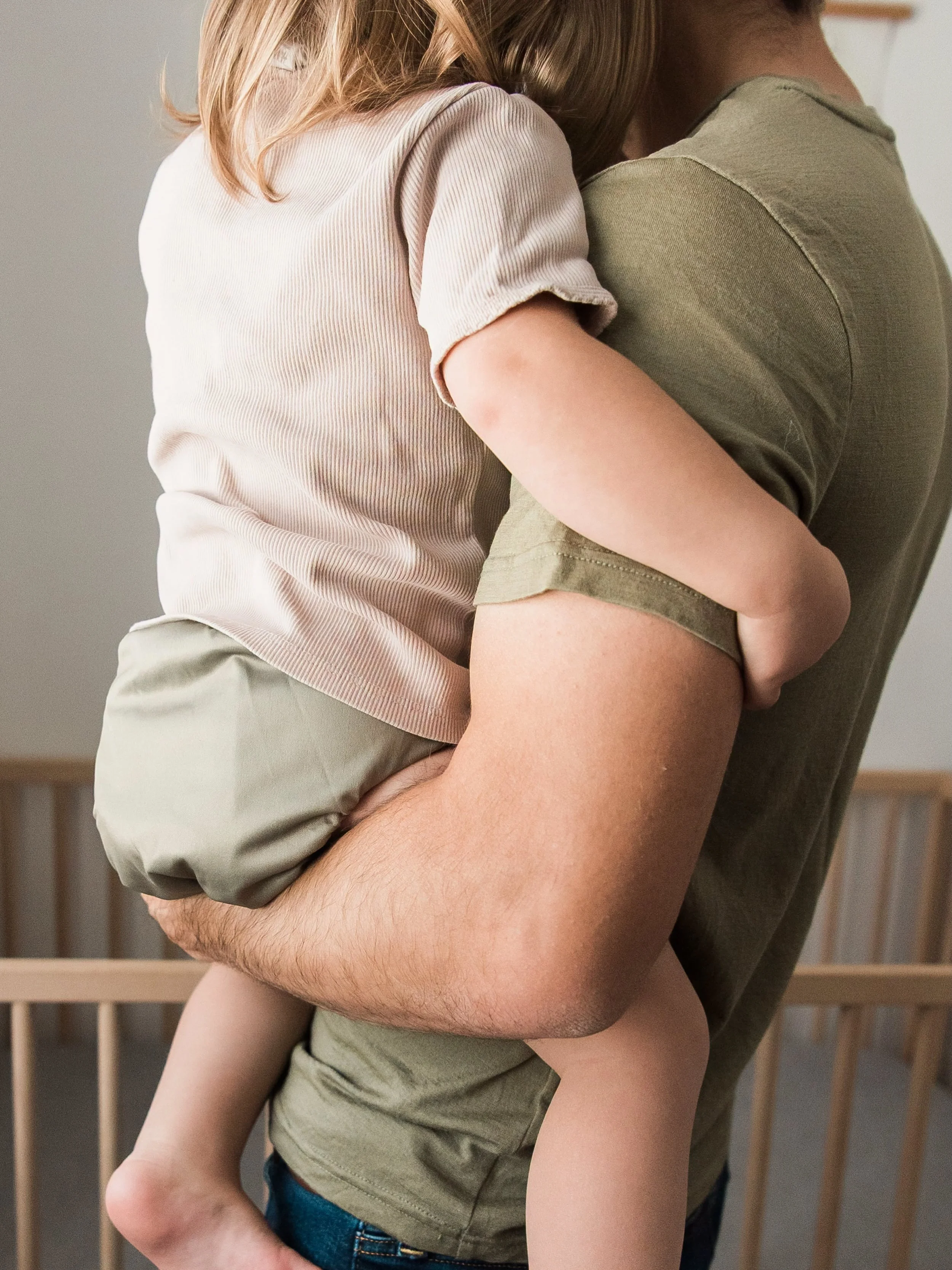
📸 Photo courtesy of Kinder Cloth Diaper Co.
How I'm Assessing My Pre-Loved Cloth Diapers Before Baby #2
One of the biggest advantages of cloth diapering is that quality diapers can often be used through multiple children. But before I add my son's old diapers to our new baby's stash, I'm giving every diaper a thorough inspection. A diaper may look perfectly fine at first glance, but hidden wear can lead to leaks and frustration once baby arrives.
The first thing I'm doing is pulling everything out of storage and checking each diaper carefully. I'm looking for:
Elastic that may need replacing
Cracked or peeling waterproof layers (PUL)
Stains or lingering odors
Worn inserts that may have lost absorbency
Missing snaps or other damage
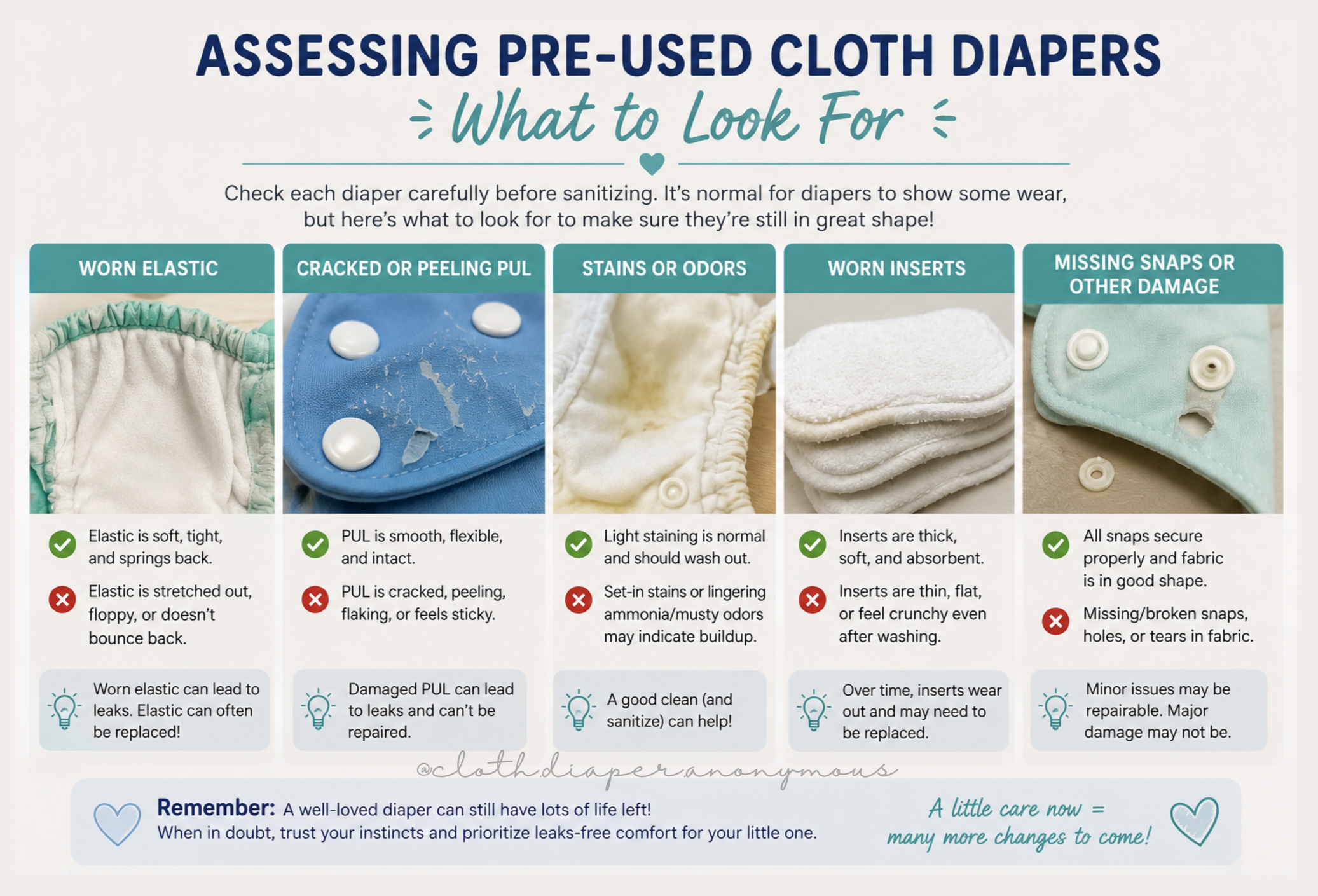
1. Elastic: Does It Still Have Life Left?
Elastics are one of the first components to wear out on cloth diapers. Good elastics create a snug seal around your baby's legs and back to prevent leaks.
Signs of Worn Elastic:
❌ Feels loose or floppy
❌ Stays stretched when pulled
❌ Appears flat or smooth with little gathering
❌ Gaps easily around the legs or back
Signs of Healthy Elastic:
✅ Feels stretchy and firm
✅ Springs back immediately when released
✅ Has visible gathers or "scrunching"
✅ Creates resistance when gently pulled
A good test is to lay the diaper flat. The leg and back elastics should naturally pull the fabric inward and create noticeable ruffles. If the diaper lies completely flat with no gathering, the elastic may be shot.
Another simple test is the "pinch and release" test:
Pinch the elastic and stretch it slightly.
Let go.
Healthy elastic should immediately snap back into shape.
If it slowly retracts or doesn't retract at all, it likely needs replacing.
The good news? Elastic replacement is one of the most common cloth diaper repairs and can often give a diaper many more years of life.
2. PUL: Is the Waterproof Layer Still Intact?
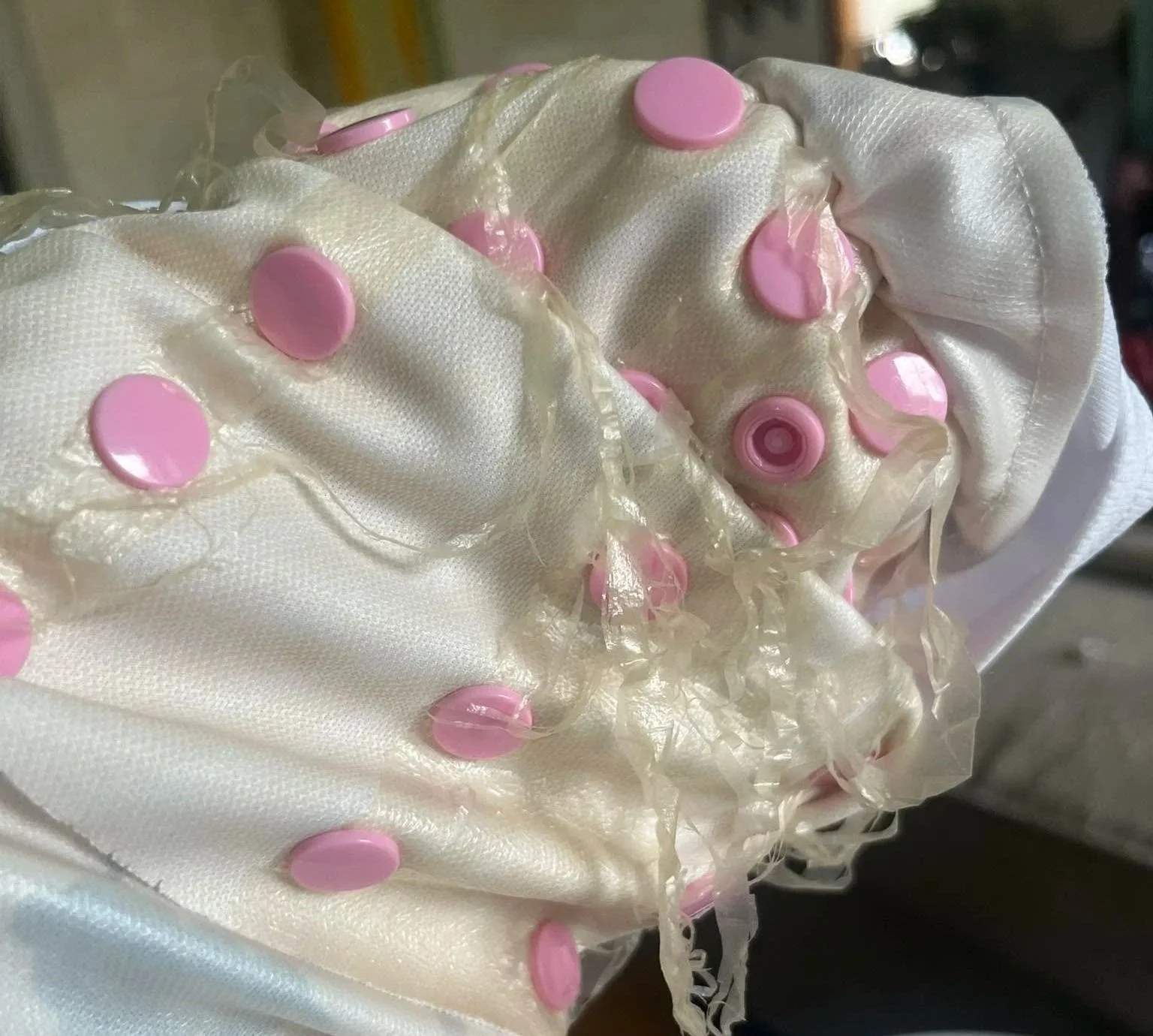
📸 Photo sourced from the Cloth Diapering - Uncensored!! 💥 FB Group
The PUL (polyurethane laminate) is the waterproof layer hidden inside most diaper covers and pocket diapers. Once the PUL is compromised, leaks become inevitable.
Visual Signs of Delaminated PUL:
❌ Cracks, Peeling or flaking
❌ Bubbling between fabric layers
❌ Visible wet spots when leak testing
❌ Sticky or tacky spots
One of the easiest ways to detect delamination is the "ear-piercing crinkle test." You can gently bend the diaper in several directions. If you hear excessive crackling or notice the layers separating, the PUL may be failing. Delaminated PUL often makes a much louder, sharp, almost plastic-like crinkling sound. Some cloth diaper parents describe it as an "ear-piercing" or "chip bag" sound. This occurs because the laminate is separating from the fabric and becoming brittle.
Healthy PUL usually makes a soft, flexible rustling sound when handled.
Aside from the clearly visible damage there can also be defecting PUL- take a wet wipe to the plastic lining and if you see or feel wet spots appear on the printed fabric side, you may have some micro-tears.
Unfortunately, unlike the elastics, delaminated PUL generally cannot be repaired, but not to worry, if you love the print- these can still be use- as swim diapers.
3. Absorbency: Do the Inserts Still Absorb?
Over time, inserts can develop detergent buildup, mineral buildup, or fabric wear that causes them to lose absorbency or even repel liquid.
The Drip Test
Lay the insert flat and slowly pour or drip a small amount of water onto it.
Healthy inserts:
✅ Absorb water almost immediately. - the only exception to this is microfleece or microfiber inserts- those sometimes require a bit of pressure to get the water to seep through the top layer.
Problem inserts:
❌ Water beads up.
❌ Water sits on the surface.
❌ Water rolls off the fabric.
❌ Water takes an unusually long time to absorb.
These issues can usually be corrected with troubleshooting and proper washing.
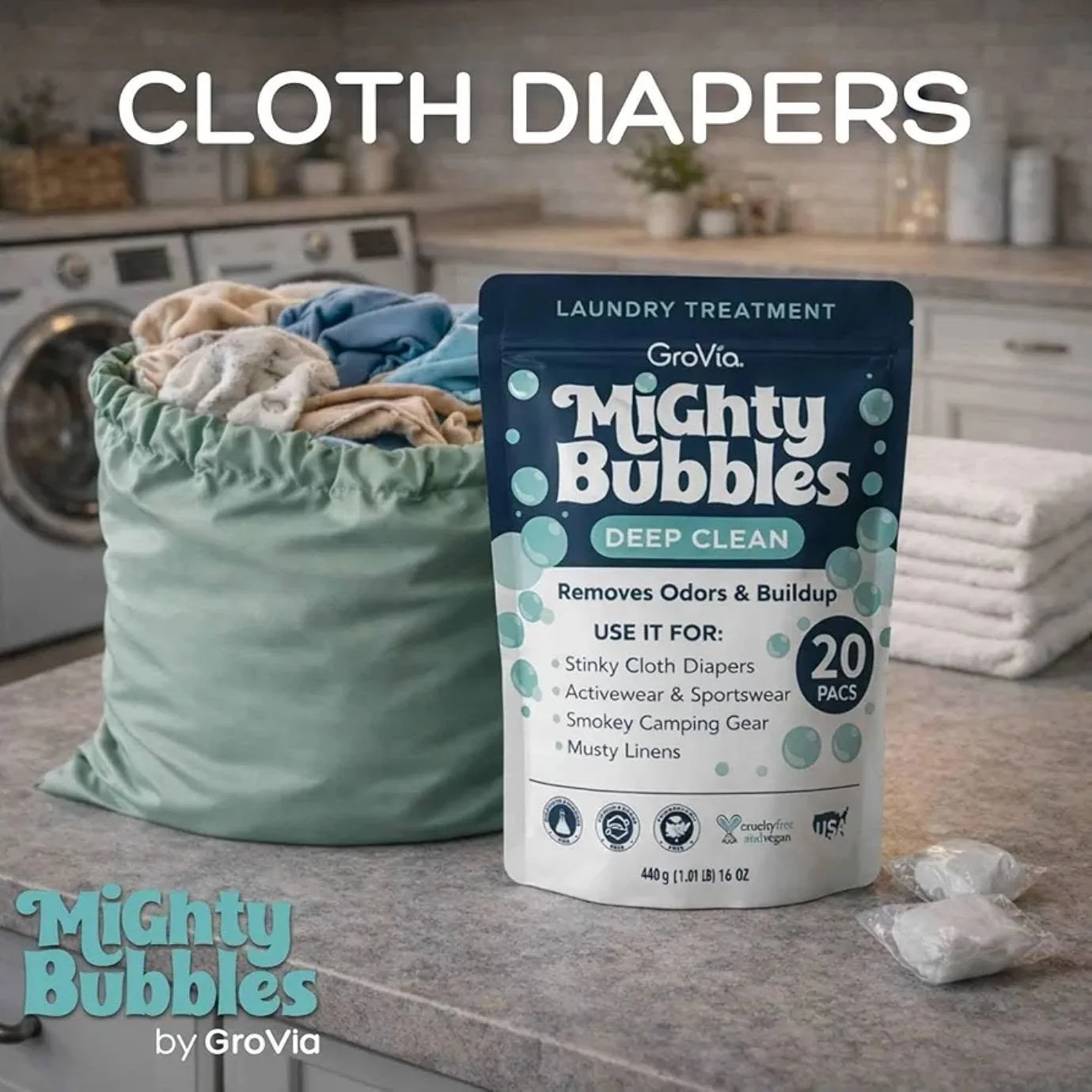
Before sanitizing I want to make sure everything is clean and there’s no detergent or build up and the best way to do that is with a Mighty Bubbles Deep Clean If that’s not available the next best option is RLR. Both products are meant to be used on clean diapers so a quick wash might be needed prior but be sure to follow the directions on the label.
No need to soak them in a bathtub- unless you just have way too much to fit in a standard washer. It’s a viral trend to soak but it’s really not necessary or any more efficient.
4. Check for Compression Wear
Even if inserts absorb water, they may no longer hold enough liquid.
Signs of worn-out inserts include:
❌ Thin or flattened fabric
❌ Compressed or matted fibers
❌ Inserts that feel stiff or crunchy
❌ Fraying edges
❌ Reduced absorbency compared to when they were new
Natural fibers can often shrink and become denser over time, which isn't necessarily bad. However, severely thinned or compressed inserts may simply have reached the end of their lifespan.
5. Inspect Snaps, Stitching, and Fabric
Finally, I'm checking every diaper for structural issues:
✅ Snaps securely fasten and stay closed
✅ Stitching is intact
✅ No holes or tears
✅ Hook-and-loop (Velcro) closures still grip properly
✅ Pocket openings and seams are secure
Small repairs can usually be fixed, but multiple areas of damage may not be worth the effort.
My Rule of Thumb
I ask myself three questions:
Can it absorb?
Can it contain moisture?
Can it fit baby securely?
If the answer to all three is yes, the diaper is probably ready for another round of cloth diapering.
A little inspection now can save a lot of leaks, frustration, and laundry later—and there's something really special about giving these well-loved diapers another baby to care for.

Step 2: Sanitizing Our Used Diapers
Because these diapers were previously used by my son and have been sitting in storage, I'm choosing to do a full bleach sanitization before using them for our new baby. Sanitizing helps ensure any bacteria, yeast, mold spores, or other microorganisms that may have survived storage are eliminated so we can start fresh with confidence.
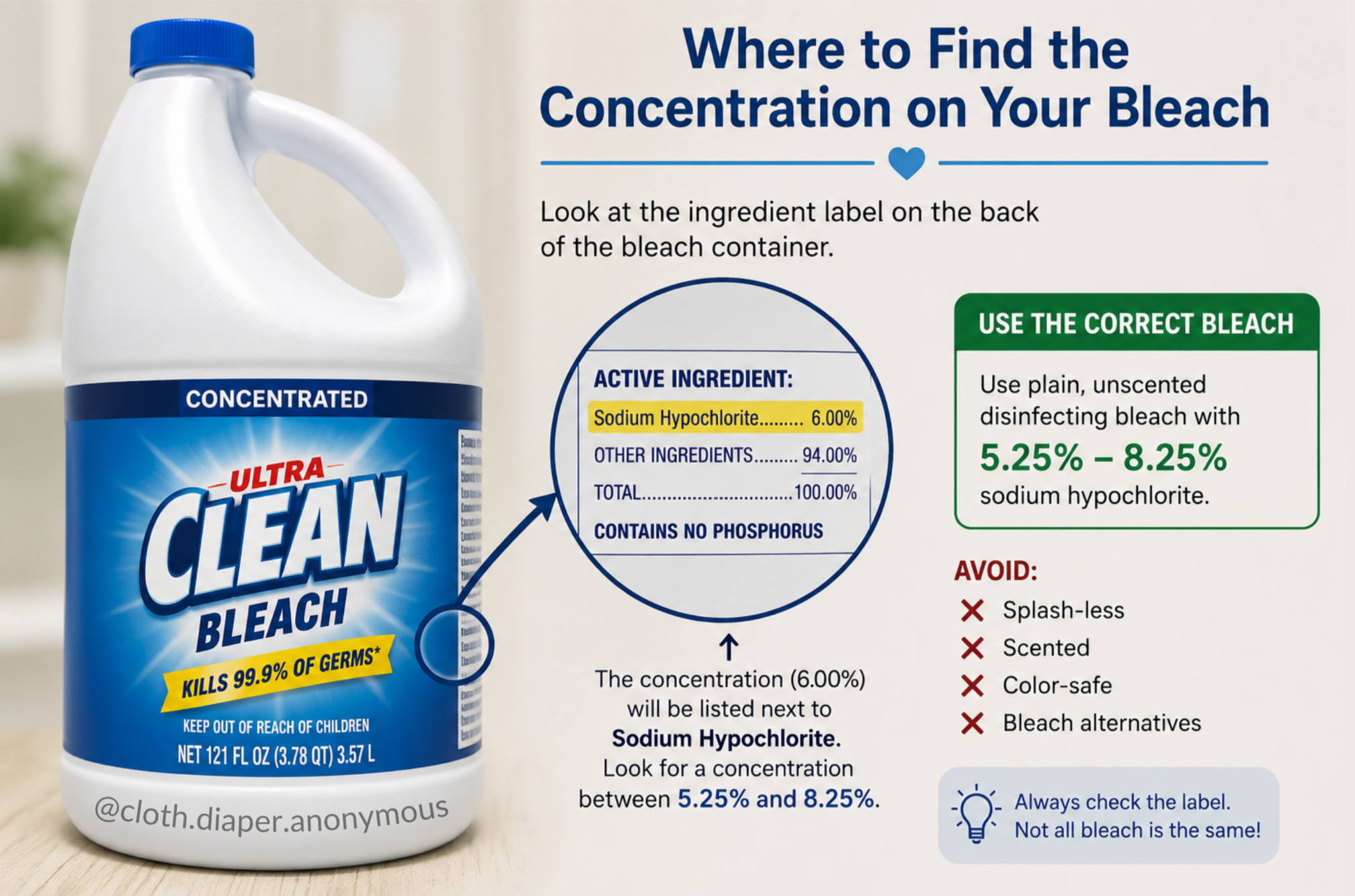
The key is using the correct bleach. Not all bleach products are created equal, and many "splash-less," scented, or color-safe formulas should never be used for cloth diapers because they don't contain the proper disinfecting strength and can leave residues behind.
For sanitizing cloth diapers, use:
Plain, unscented disinfecting bleach
Sodium hypochlorite concentration between 5.25% and 8.25%
Avoid splash-less, gel, scented, or bleach alternatives.
My Sanitizing Process
Start with clean diapers. Bleach sanitizing should never be done on dirty diapers. I first wash everything using my normal wash routine to remove any soil and detergent buildup.
Run a bleach sanitize cycle.
For a standard top-loading washer filled with enough water to fully cover the diapers, use approximately ½ cup of regular disinfecting bleach (5.25%-8.25% sodium hypochlorite).
For HE front-loaders or smaller-capacity machines, approximately ¼ cup of bleach is typically sufficient.
The goal is to achieve a disinfecting solution strong enough to sanitize while remaining safe for the fabrics and elastics.
Allow adequate contact time. The diapers should soak in the bleach solution for approximately 30 minutes. This gives the bleach enough time to effectively disinfect.
Rinse and wash again. After sanitizing, I run another complete wash cycle to thoroughly remove any remaining bleach from the diapers.
Dry completely. Once washed, I allow everything to dry fully before storing or putting the diapers into our newborn rotation.
I know the word "bleach" can sound scary to new cloth diaper parents, but when used correctly, a properly diluted bleach sanitize is considered safe for most cloth diapers and is one of the most effective ways to reset a stash between children.
For first-time cloth diaper parents, don't feel intimidated by the process. Cloth Diaper Anonymous has resources to help you every step of the way, including our Detergent Index, wash routine advice, and our previous blog post on prepping a cloth diaper stash for beginners.
Step 3: Prepping New Cloth Diapers
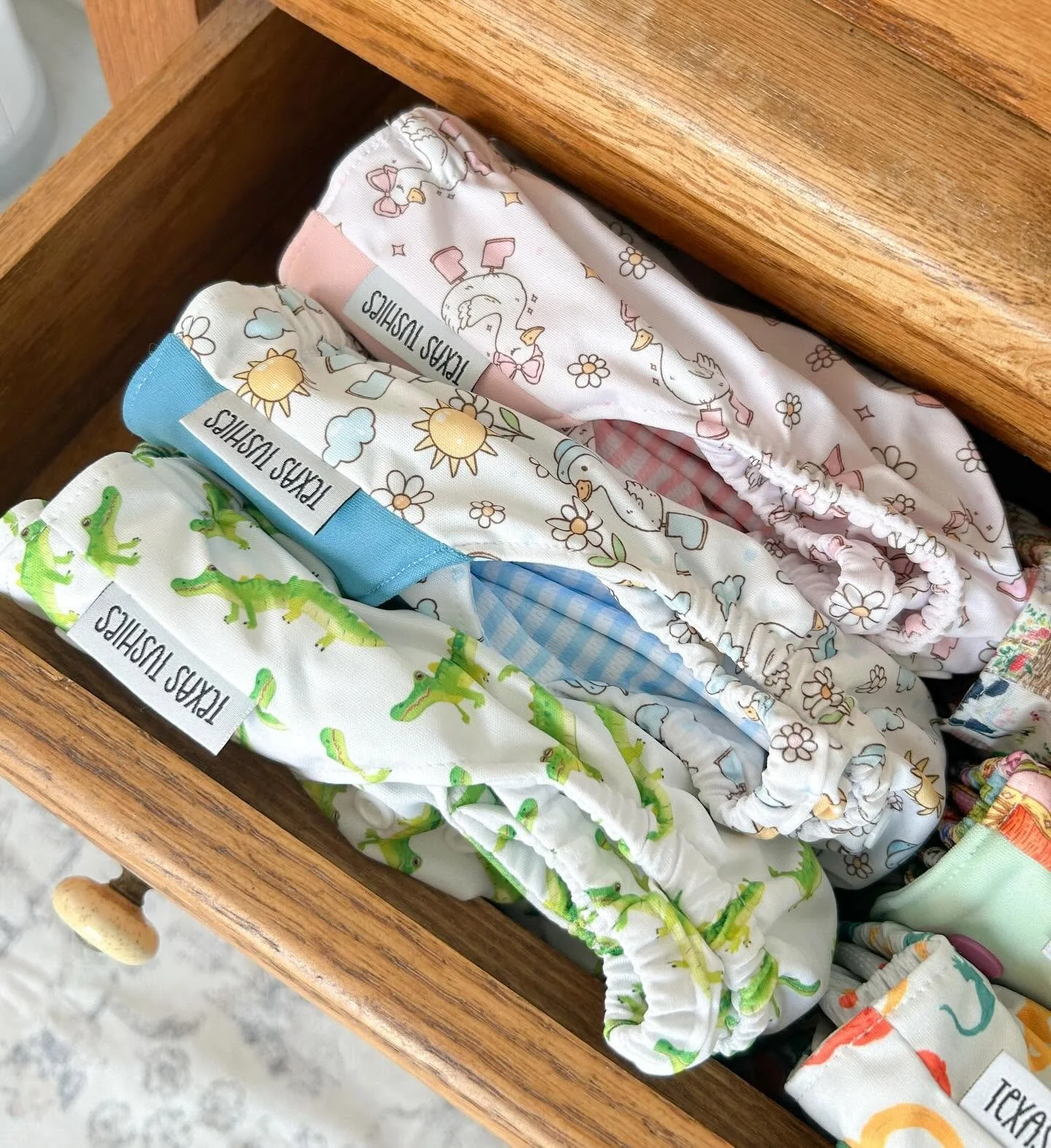
Of course, I couldn't resist adding a few new diapers to our collection!
New cloth diapers often require prep washes before they're ready for use. Natural fibers like cotton, hemp, and bamboo usually need multiple washes to reach their maximum absorbency, while synthetic materials typically need only one wash to remove manufacturing residues.
My plan for our new additions is simple:
Separate diapers by fabric type
Complete the recommended prep washes
Dry between cycles when needed
Test absorbency before adding them to the changing station
It takes a little extra time upfront, but it makes a huge difference once baby arrives.
Pro Tip: Hot wash your new natural fiber inserts/absorbency twice then you can add in pockets or other diapers that need to be washed. Natural fibers are often coated in an oil and you don’t want that transferring onto the other fabrics in your wash.
Step 4: New Home = New Wash Routine
Even though this isn't my first cloth diapering journey, I'm essentially starting over when it comes to our wash routine.
Before baby arrives, our family will be moving into a new home that uses well water, which means the wash routine that worked perfectly for my son's diapers may not work the same way this time around. Water quality plays a huge role in cloth diaper success, and factors like mineral content, hardness, and iron levels can all affect how well diapers get clean.
My plan is to start by learning as much as I can about our new water. I'll be testing the water hardness and paying attention to any signs of iron or mineral buildup so I can choose the right detergent and make adjustments if needed.
With well water, it's often not as simple as using the same routine you've always used. Some families may need:
Different detergent amounts
Additional rinses or fewer rinses
Water softening strategies
Routine adjustments based on mineral content
Troubleshooting for buildup, staining, or odors
As much as I love cloth diapering, I know there may be a little trial and error involved as I figure out what works best in our new home. But honestly, that's one of the biggest lessons I've learned as a second-time cloth diaper mom: wash routines aren't one-size-fits-all.
What worked in one house may need tweaking in another, and that's completely normal.
Thankfully, I don't have to figure it out alone. If you're navigating a move, well water, hard water, or simply struggling to get your diapers clean, Cloth Diaper Anonymous offers a Detergent Index and personalized wash routine advice to help you troubleshoot and build a routine that works for your specific washer and water conditions.
I'm preparing for a new baby, a new home, and an entirely new wash routine—but thanks to the knowledge I've gained from cloth diapering my first child and the support of this community, I feel ready to tackle this next chapter one load of laundry at a time.
Looking Forward to Round Two
There's something incredibly special about preparing these diapers again. Some of them hold memories of my son's first months, and now they'll get to be part of another baby's story.
Preparing a cloth diaper stash for a second child takes a little effort, but it's also a reminder of why I chose cloth diapering in the first place: reusability, sustainability, and the joy of using products that can serve our family again and again.
Whether you're preparing your very first stash or getting ready to cloth diaper another little one, know that you're not alone. The Cloth Diaper Anonymous community is here to help every step of the way.
Now if you'll excuse me, I have diapers to wash and a baby to finish preparing for!
*This post contains affiliate links. I do earn a small commission or store credit for some referrals purchased through these links. Any opinions shared are my own, I am just disclosing my material affiliation as required by the FTC. Commissions earned help continue to sponsor this content, donation, giveaways and more. Your support is so greatly appreciated <3




Need help finding something?
Shop Now